THE FOUNDING FATHERS

In the early 20th century, as the Russian Empire crumbled, a group of remarkable Kazakh intellectuals emerged to lead their people toward a new vision of nationhood. These men—educated, forward-thinking, and deeply patriotic—laid the foundation for what would become the Alash Orda movement. Their struggle to preserve Kazakh identity while embracing modernization left an indelible mark on Kazakhstan's journey toward independence.
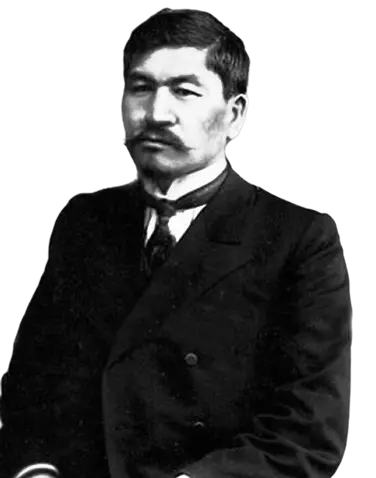
Portrait of Alikhan Bukeikhanov

Alikhan Bukeikhanov

1866-1937

The primary architect of the Alash movement, Bukeikhanov was a descendant of Kazakh nobility and a man of remarkable intellect. Educated in both traditional Kazakh schools and at the Forestry Institute in St. Petersburg, he embodied the synthesis of Kazakh tradition and European enlightenment values.

As a statistician, ethnographer, economist, and journalist, Bukeikhanov documented the life and struggles of the Kazakh people under colonial rule. His works exposed the injustices of Russian land policies and advocated for Kazakh rights within the empire.

When revolution swept across Russia in 1917, Bukeikhanov emerged as the natural leader of the Kazakh national movement. As the first Prime Minister of the Alash Autonomy, he sought to establish a democratic government that would preserve Kazakh lands and culture while guiding the nation into modernity.

"The Kazakh people have the right to determine their own future. Our path forward must be founded on education, democracy, and respect for our ancestral traditions."

Stalin's purges claimed his life in 1937, but his vision of Kazakh sovereignty would ultimately be realized decades later.
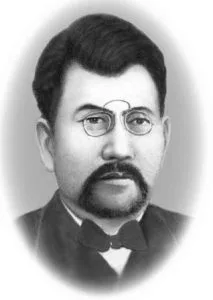
Portrait of Akhmet Baitursynov

Akhmet Baitursynov

1873-1937

Known as the "teacher of the nation," Baitursynov was a pioneering linguist, educator, and poet whose contributions to Kazakh culture were immeasurable. Born into a nomadic family, he overcame tremendous obstacles to obtain an education and dedicated his life to making knowledge accessible to all Kazakhs.

His greatest achievement was the reformation of the Kazakh writing system, creating a modified Arabic script that better suited the Kazakh language and made literacy more attainable for the common people. As editor of the influential newspaper "Qazaq," he used journalism to awaken national consciousness and spread progressive ideas.

Within the Alash Orda government, Baitursynov served as Commissar of Education, designing a modern educational system rooted in Kazakh culture and language. He believed that true independence required not just political freedom but intellectual sovereignty.

"A nation that loses its language loses its soul. Our first duty is to preserve our mother tongue, for in it lies the wisdom of our ancestors and the promise of our future."

Though initially cooperating with Soviet authorities in hopes of advancing Kazakh education, he was eventually arrested and executed in 1937, a martyr to the cause of Kazakh cultural autonomy.
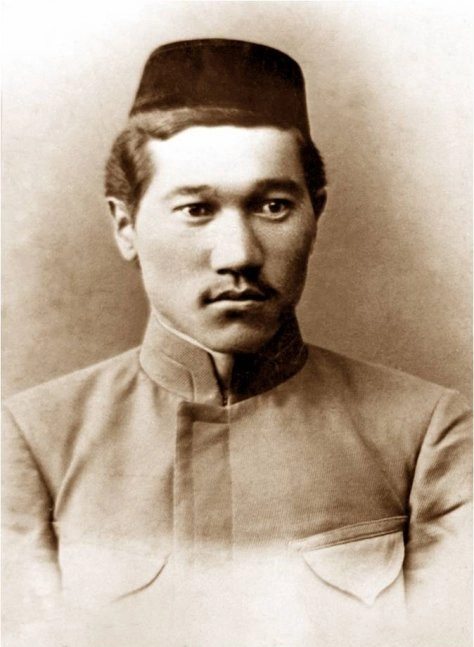
Portrait of Mirzhakyp Dulatov

Mirzhakyp Dulatov

1885-1935

The passionate voice of Kazakh nationalism, Dulatov was a gifted writer whose works kindled the flame of national consciousness. His 1909 poetry collection "Oyan, Qazaq!" ("Wake Up, Kazakh!") became a rallying cry for a people struggling under colonial domination.

The youngest of the core Alash leaders, Dulatov brought revolutionary energy and literary talent to the movement. His writings combined searing criticism of Russian imperialism with calls for educational reform and women's rights—radical ideas for their time.

Within the Alash government, he worked to establish a national press and literature that would strengthen Kazakh identity. His vision extended beyond political independence to cultural renaissance, seeing in Kazakh traditions the seeds of a flourishing modern nation.

"Wake up, Kazakh! Lift your head! Do not waste your days in ignorance and darkness. The time has come to claim our rightful place among the nations of the world."

Imprisoned by Soviet authorities in 1928, Dulatov died in the Gulag in 1935. His words, however, continued to inspire generations of Kazakhs in their quest for freedom.
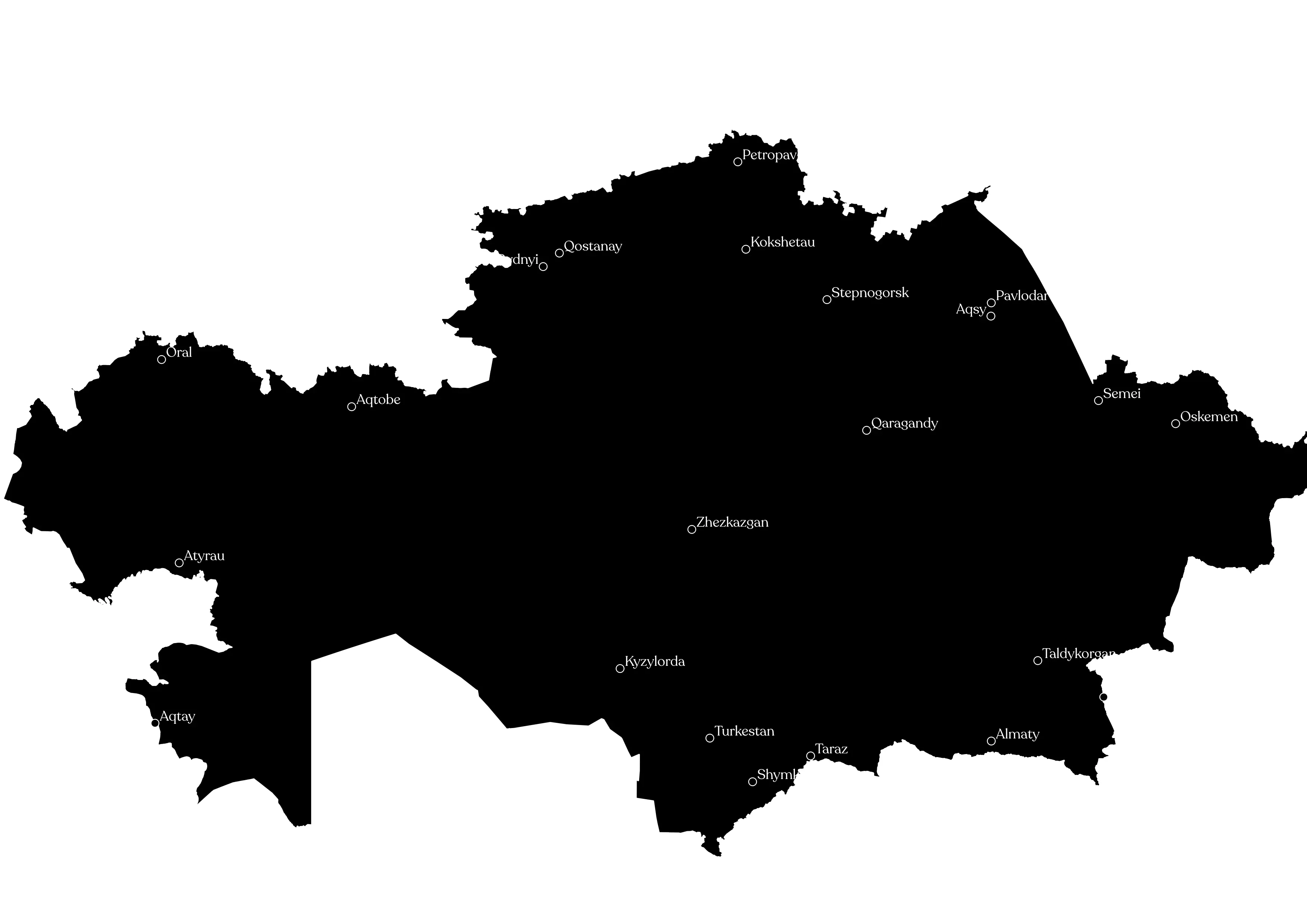
BIRTHPLACES OF ALASH ORDA LEADERS

Map of Kazakhstan

Alikhan Bukeikhanov

Born in Karkaraly, Karaganda region (1866)

Prime Minister of the Alash Autonomy

Zhakyp Agbay

Born in Karkaralinsk district (1876)

Zhakyp Akpayev was a prominent Kazakh lawyer and political activist in the early 20th century. He played a key role in the Alash movement, advocating for national autonomy, legal reform, and the rights of the Kazakh people within the Russian Empire.

Akhmet Baitursynov

Born in Aqqol village (1872)

Akhmet Baitursynov was a Kazakh intellectual, linguist, and educator who reformed the Kazakh alphabet and played a crucial role in developing Kazakh national identity. As a leading member of the Alash movement, he promoted education, journalism, and political autonomy for the Kazakh people.

Mirzhakyp Dulatov

Born in Turgai region (1885)

Mirzhakyp Dulatov was a Kazakh writer, poet, and political figure, known for his nationalist works and his role in the Alash movement. Through literature and activism, he raised awareness of colonial oppression and championed the cause of Kazakh cultural and political independence.

Mustafa Shokai

Born in Kyzylorda region (1890)

Mustafa Shokay was a Kazakh politician, publicist, and statesman who fought for the independence and unity of Turkic peoples in Central Asia. After fleeing Soviet repression, he continued his advocacy in exile, striving for freedom and self-determination of Turkestan.

Map Legend

Birthplaces of Key Alash Orda Leaders
Geographical Distribution of Alash Movement Leadership (Bounding box)

The Alash movement brought together Kazakh intellectuals from across the steppe. These five leaders represent different regions of Kazakhstan, highlighting how the national awakening encompassed the entire territory.

THEIR ENDURING LEGACY

Although the Alash Orda government survived for only a brief period (1917-1920), the vision of its leaders left an indelible mark on Kazakh consciousness. During the Soviet era, their names were forbidden, their works banned, and their contributions erased from official history—but their memory endured in the hearts of the Kazakh people.

When Kazakhstan finally achieved independence in 1991, the Alash leaders were rehabilitated and celebrated as national heroes. Today, universities, streets, and cultural institutions bear their names, and their writings are studied as foundational texts of Kazakh nationhood.

Perhaps most importantly, their dream of a sovereign Kazakhstan that honors its heritage while embracing progress has been substantially realized. The modern Kazakh state, with its distinct identity and growing prosperity, stands as a testament to the foresight and sacrifice of Bukeikhanov, Baitursynov, Dulatov, and their comrades.

Their story reminds us that nations are built not only through political struggles but through cultural awakening and intellectual leadership. The Alash visionaries gave Kazakhs not just a political program but a renewed sense of who they were and what they might become.

Return to Home